
Wilson County's 72-Hour Blotter
The WCSO 72-hour intake and release view is Wilson County's multi-day arrest window. It rolls forward hour by hour. That span is not three fixed calendar dates, and it is not a permanent archive either. Mondays are where it earns its keep. A Friday arrest can still surface when the same-day lists have moved on, and a delayed booking can land outside a narrow cutoff. Releases show up here too.
Both event types sit in this Wilson County view. Check the type before assuming a new arrest. The time of arrest can lag jail intake, data entry, or public posting by hours. Weekend surges mean more processing work. WCSO publishes no fixed refresh promise for the portal, so timing can shift without notice.
| Source | Best use | Limit |
|---|---|---|
| 72-hour view | Recent multi-day intake and release events | Rolling window, not an archive |
| Jail Search | One name, including possible released status | Not the final court outcome |
| Agency record | Existing booking sheet or arrest report | Must ask the proper custodian |
| Court record | Charges filed and disposition | Separate from jail custody data |
Weekend Wilson Arrest Report Timing
A rolling window behaves nothing like a dated newspaper blotter. Late Friday arrests can stay visible into Monday. The exact event time decides. Monday entries do not replace it. Each arrest drops away only after crossing the portal's 72-hour boundary. Timestamps beat day names. Processing adds its own layer of timing. Bond and custody details can shift once a magistrate or a court reviews the case. North Carolina's first-appearance framework calls for prompt review, though courthouse closures can slow the calendar, so a hearing date or current case status belongs with the Wilson County court contact directory, not an old blotter entry.
Older Wilson County Arrest Reports
An arrest past the 72-hour window needs a different tool. Skip the copied listings. Use the official WCSO Jail Search. It takes a first name, last name, and a Released selection. That released filter matters. A person can leave the active roster. The Wilson County record still exists. Ask the record's custodian when the search comes up empty.
- Search the person's name in WCSO Jail Search and try the Released option.
- Call WCSO at (252) 237-2118 and ask who holds the booking sheet, arrest report, or identification photograph.
- Give a name, approximate arrest date, agency if known, and the specific record requested.
- Search the North Carolina eCourts Portal, then ask the Wilson County Clerk for the official case file or disposition.
- For a genuinely historical series, ask which agency retained it before contacting the State Archives.
WCSO lists no dedicated records-unit line. The same goes for an online sheriff request form, a set copy fee, and a fixed response period. So skip the invented details. Lawful limits still apply. North Carolina agencies hand over existing public records, but a broad request never obligates them to build a fresh compilation. The State Archives contact page offers a route for questions about a specifically identified historical series.
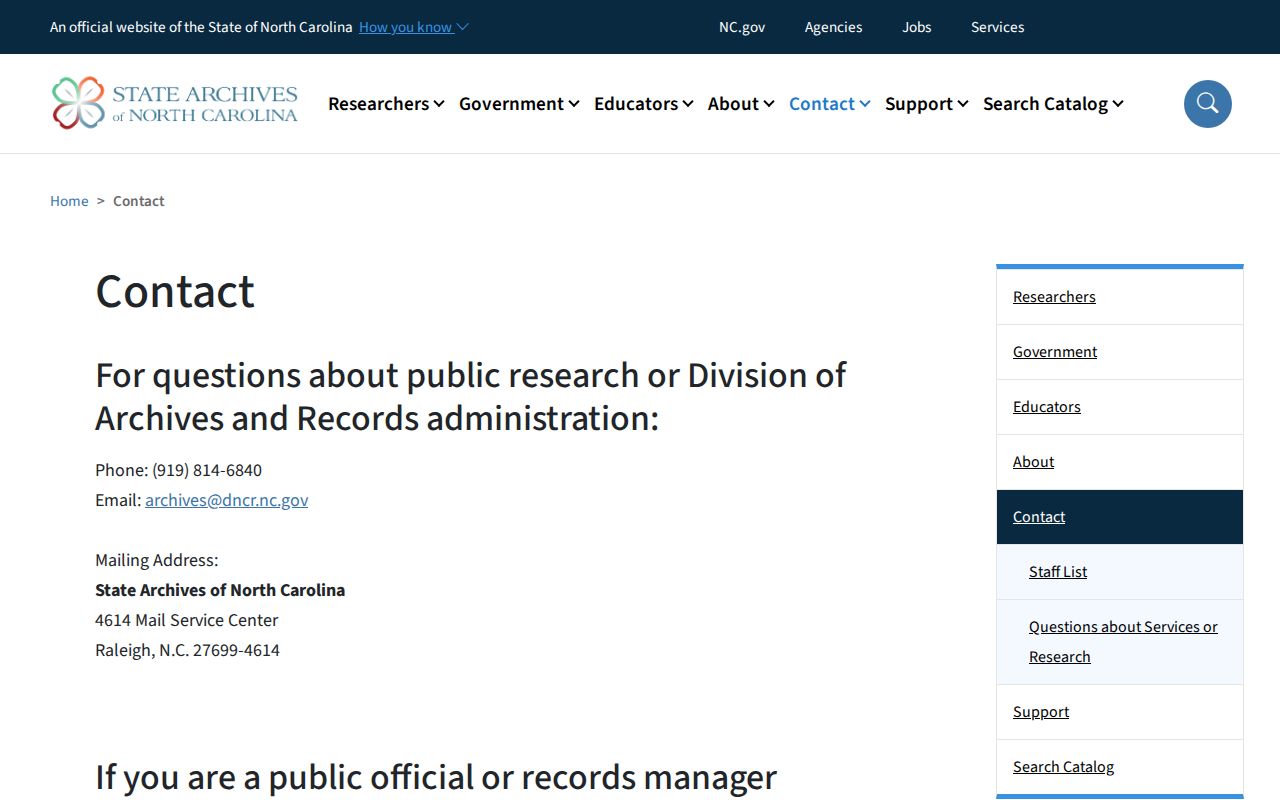
Why check the Archives last? Its page does not prove any Wilson County booking record was transferred, so ask WCSO and the Clerk first.
Wilson Arrest Reports Outlive Feeds
The North Carolina County Sheriff's Office retention schedule splits sheriff records into many separate series. Each series gets its own clock. Arrest-processing tracking records can be destroyed after one year. DWI tracking gets two years. Arrest reports left out of a case file sit on a five-year schedule. Identification photographs tied to formal investigations get three years. That applies when they are not part of a case file. Inmate incarceration records run on their own period, measured after release or transfer. None of that is a destruction date. Wilson County may keep records longer. Its adopted schedule governs. Records cannot be destroyed while an audit, a lawsuit, or another qualifying hold is pending. That protection also covers holds reasonably anticipated. Case-file incorporation can change the controlling series. Felony and misdemeanor case histories follow different rules. The practical lesson is simple. A link can vanish from a short public window. That does not prove the arrest report, booking photo, or court file was destroyed. Web publication length and legal retention are two different things. Retention also differs from public access. A record can exist while some content stays withheld under a lawful exception. That often covers material belonging to a criminal investigation rather than the public arrest-information categories. Ask for a named record. Accept a redacted copy when needed. If an office denies access, request the legal basis rather than assuming every item must be released in full. The state local-records page explains how schedules govern county and municipal records.
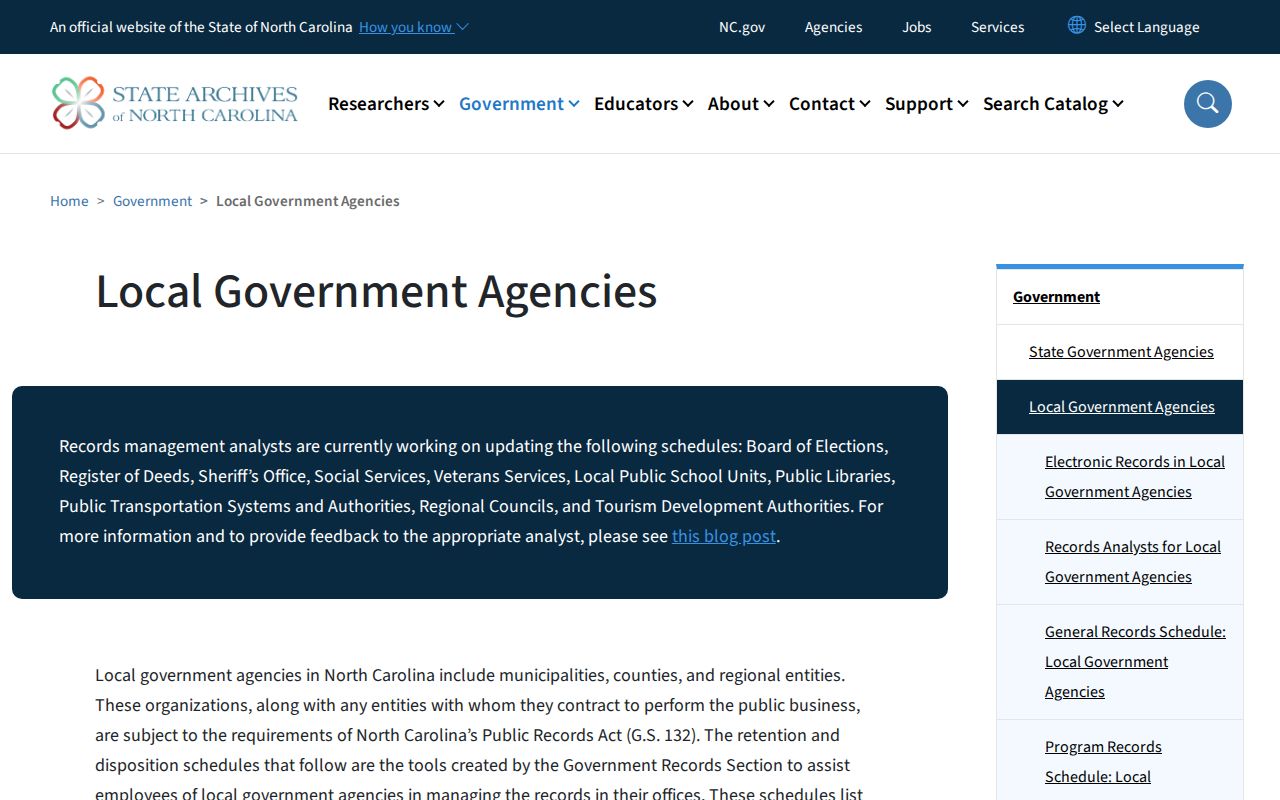
The state resource gives records-management context. For a specific Wilson County arrest report, the county custodian still comes first.
Wilson Arrest News Runs Differently
Newspapers cover crime differently than jails track it. The Wilson Times crime section reports stories while WCSO keeps the booking records. In the past, the paper ran a felony-arrest page refreshed through the day from public-safety agencies. Its Saturday print list covered a slightly older date range. That older rhythm explains why a story can linger after the sheriff's roster moves on. Treat it as history, not a schedule. A newsroom picks what it prints. An article might cite an agency release, a warrant, a court paper, or a booking entry. Its photo could be a booking photograph, an agency handout, or a scene shot. It might also be a surveillance still or a file image. Check the caption. Note the named source. Regional outlets like ABC11, WITN, and WNCT also run selected Wilson stories. None publishes a routine booking blotter. Use a story to spot a case. Then return to WCSO or the court for the record itself.
Unofficial Wilson Arrest Archives
Unofficial sites come last for a reason. They copy booking data on their own schedules and keep it long after the fact. Busted Newspaper holds a deep Wilson County archive. RecentlyBooked shows a recent window of arrests, while Mugshots Zone splits its listings by month. None of them answers to WCSO. Entries can be stale, incomplete, or mismatched.
Depth is not accuracy. A copied charge can outlive a court change. A town label doesn't say which agency made the arrest. Arrests.org lists no Wilson-local section, yet that means little about whether the data exists.
One useful example is the RecentlyBooked Wilson page, an unofficial county view of recent bookings.
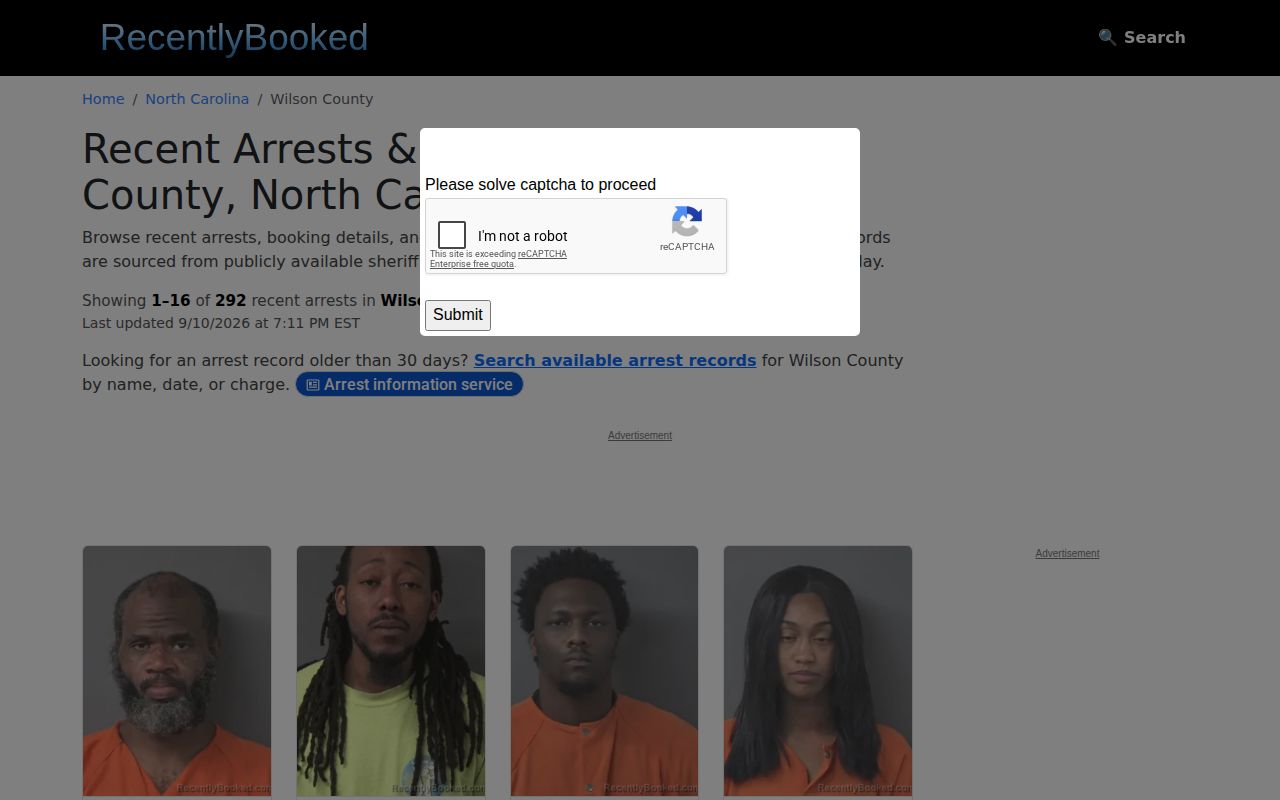
A page like that can point you toward a possible record. It cannot settle current custody or a case outcome. Check with the sheriff. Confirm the filed case with the court.
Choose the Correct Wilson Record
Match the record to the stage you need. Arrested Today covers the narrow rolling window when someone is booked and released. For a multi-day check, start there. Older events call for a name search or a records request. Incidents handled by Wilson Police appear in the Police to Citizen Daily Bulletin and the city records path. A city incident is not a county booking.
Someone serving a state sentence, on probation, or on parole belongs in the NCDAC offender search rather than the Wilson County blotter. Court records carry the outcome. Each tracks one stage. That separation keeps a release, a transfer, or an old copied item from looking like a new arrest. Save the source date whenever you keep a report. Rolling feeds change within hours, news pages get revised, and archives keep older copies. When two records clash, take each field to its owner: WCSO for booking custody, the arresting agency for its report, and the Clerk for the filed case and outcome.
Public Record Search
Sponsored Results